
DBT Therapy for Emotional Regulation, Anxiety, Stress, and Relationships
What is Dialectical Behaviour Therapy (DBT)?
Dialectical Behaviour Therapy (DBT) is an evidence-based therapy approach that helps individuals better understand and manage emotions while developing healthier coping strategies.
The 4 Core Pillars of DBT
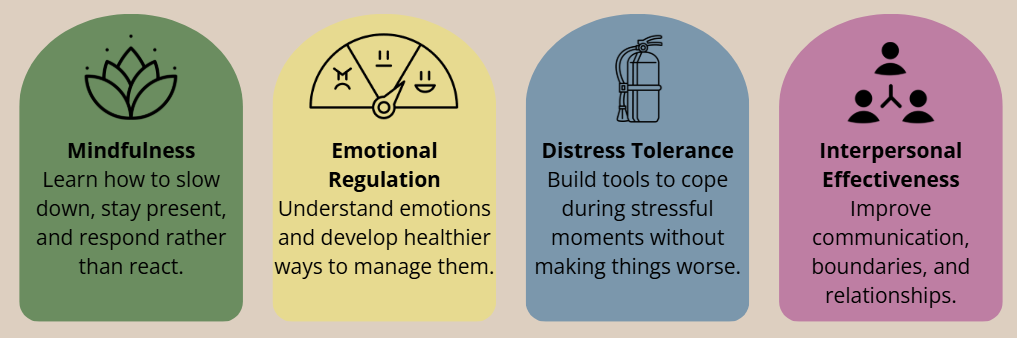
DBT focuses on balancing two important ideas:
accepting yourself as you are
while also working toward meaningful change
How do I know if DBT is right for me?
Do you feel emotionally overwhelmed easily?
Struggle to calm down once upset?
Experience anxiety, stress, or intense emotions?
React impulsively or say things you later regret?
Have difficulty setting boundaries?
Feel sensitive to rejection or conflict?
Struggle in relationships?
Experience frequent emotional ups and downs?
Have difficulty coping with stress?
Feel stuck in patterns that no longer serve you?
DBT helps build those skills in a supportive and non-judgmental environment.
Who can benefit from DBT?
DBT can help children and teens experiencing:
anxiety
emotional outbursts (“big emotions”)
impulsivity
low self-esteem
school stress
difficult peer relationships
emotional regulation difficulties
DBT can support adults experiencing:
burnout
anxiety
relationship stress
emotional overwhelm
perfectionism
difficulty coping with stress
people pleasing
intense emotions
Frequently Asked Questions
-
No. DBT is widely used to support anxiety, emotional regulation difficulties, stress, overwhelm, relationship challenges, and many other concerns.
-
Yes. DBT can be very effective for children and teens who struggle with emotional regulation, anxiety, impulsivity, or stress.
-
Not at all. Many people use DBT to improve coping skills, communication, emotional awareness, and stress management.
-
When working with children that may be feeling anxious or impulsive, I integrate teaching specific DBT skills into age-appropriate games and activities.
-
Traditional DBT has handouts and worksheets (“homework”). Depending on the client, we may complete these in session, the client may do them at home, or we weave the information into our session along with other approaches.
-
Yes. Virtual DBT-informed therapy is available across Ontario, or in-person in Durham Region (Ajax)